
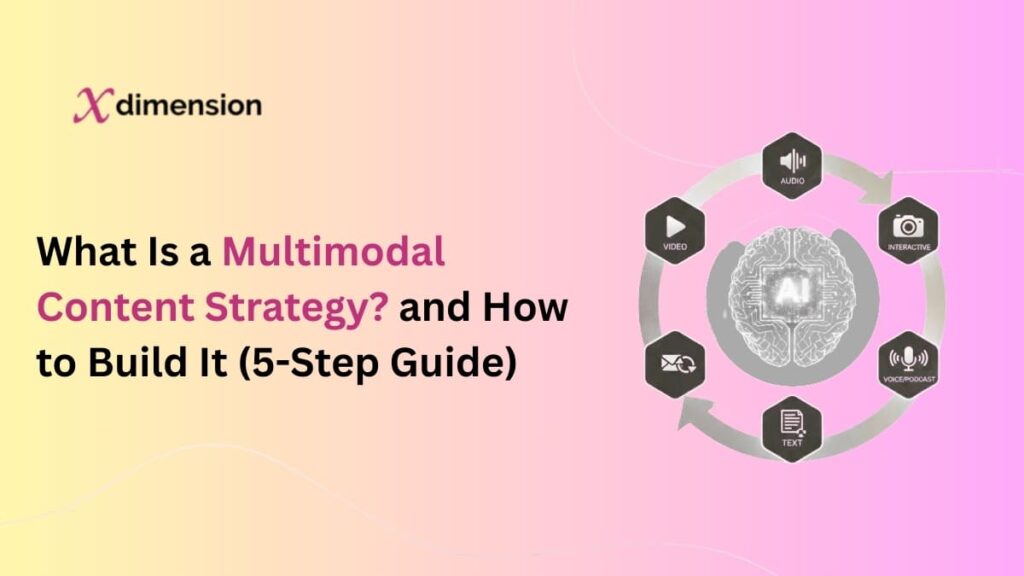
Text is no longer the only thing used by search engines and AI platforms. They now produce richer findings by processing audio, video and image data. For brands trying to stay ahead, this shift presents both opportunities and challenges. By optimizing blogs, videos, podcasts, and other formats for discoverability across Google, AI search, and other platforms, a multimodal Content Strategy assists.
With better SEO, increased interaction, stronger authority and a wider reach are the results. 5 effective actions can be used by marketing executives who want to future-proof their approach to produce and implement content that engages a variety of consumers and functions well across many forms.
What Is a Multimodal Content Strategy?
To convey a consistent message across several channels, a multimodal Content Strategy incorporates a variety of forms (text, video, audio, graphics, and interactive features). Instead, then depending only on one format, this strategy makes use of each format’s advantages to increase reach, engagement, and search exposure.
Know About The Key Elements Of A Multimodal Content Definition Include:
- Diverse formats include blogs, podcasts, YouTube videos, Instagram Reels, infographics and carousel posts.
- Aligning Content Strategy categories with the information-consuming platforms of your audience (Google Search, LinkedIn, TikTok, Perplexity).
- Making sure the primary ideas stay the same despite changing the tone and format for each medium.
- Optimizing the content for both conventional and AI search engines, that includes the alt text as well as video transcripts.
This method surely increases your chances of showing up in Google AI Overviews, featured snippets and even in the LLM-generated results by turning a single content pillar into several touchpoints.
Why Multimodal Content Matters for SEO and Brand Visibility?
The growing multimodal search capabilities and AI response engines has drastically changed and transformed the way how people search for the content. The good results are the one that incorporate text, video and even the graphics that are now given priority by Google search engine. ChatGPT and Gemini combine data from various sources to offer thorough responses.
Also, by using a multimodal SEO approach ensures that your content is optimized for all platforms, boosting exposure, enhancing interaction and fortifying your brand’s position in AI-powered search results.
By addressing zero-click searches, multimodal Content Strategy will improve the SEO. While AI platforms like Perplexity and Gemini will give more priority to multimedia sources, the visibility is ensured by appearing in featured snippets with more photos or videos. So, by combining formats like webinars, films and even the guidelines will eventually help to get regulated sectors gain audiences’ trust and credibility.
5 Steps to Build a Multimodal Content Strategy:
Knowing how to build a successful multimodal Content Strategy will be requiring more planning, format selection and even the right optimization. The following 5 steps will provide a well-structured framework for all enterprises of the marketing leaders to implement this approach effectively for better results.
Step 1: Identify Your Core Content Pillars:
Determining the basic subjects that stand in support of the needs of your audience and your objectives of the company, before actually developing a variety of formats. Your knowledge and high-value search inquiries should give relevant answers and should be reflected in these Content Strategy pillar plannings.
How to recognize content pillars effectively?
- Find subjects that are having high search traffic and intent that aligns with the conducting keyword research.
- Know about the client complaints from feedback surveys, sales calls and support tickets for better understanding.
- Examine the content gaps of competitors to find areas where you can stand out and work on.
- Match pillars to accomplish company’s goals and product offerings.
Every pillar here serves as the foundation for various content formats, ensuring uniformity and optimizing channel reach.
Step 2: Choose the Right Formats for Each Channel:
Not every format works on every platform. Effective Content Strategy with the right format selection will be depending on user search intent, platform behavior and even the audience preferences.
By aligning formats with platform changing aspects, you make sure that each and every piece of content will be performing optimally where it’s distributed.
Step 3: Integrate AI and LLM Tools for Content Creation:
AI content tools have now become very crucial as they are scaling multimodal strategies without increasing resources in the right ration. These platforms automate repetitive tasks, also assist with content repurposing and even optimization for AI-driven search.
Balancing the AI content with human overview still remains vital. The enterprise audiences will only expect accuracy, authenticity and the brand alignment. At X-Dimension, we completely stand in support of the brands that are having AI-powered SEO strategies to deliver transformational growth while also maintaining the human-led quality control.
Step 4: Optimize Each Format for Better Visibility And Discoverability:
Creating multimodal content strategy is not really enough. Without proper multimodal SEO optimization, your assets will not be able to surface in search results or AI-generated answers.
AI answer engines like ChatGPT and Perplexity increasingly prioritize content that provides context across formats. When your blog includes an embedded video and downloadable infographic, you get an increase in the overall likelihood of being mentioned as a comprehensive source.
Step 5: Get The Track, Measure and Refine Your Content Strategy:
To craft a successful multimodal content strategy, it requires continuous monitoring and repetition. Regular tracking of the content performance across all formats will be helping in identifying what echoes with your audience and where changes are required.
Multimodal strategies can really amplify the end results. A high-ranking blog can boost its video and a podcast can drive traffic to infographics. Know more about these connections to understand their impact better.
Conclusion:
A multimodal content strategy is no longer optional but rather it is an essential element for better visibility and more engagement.
To get success, you must adopt diverse content formats, use AI tools and optimize for more discoverability. The thin content is no longer enough in the digital world. So, to stay ahead, get the plan which is future-proof with a full range of formats. Also, make sure you have strengthened your execution with our content marketing services that will ensure your message reaches audiences wherever they search. So, hurry up and connect with the experts today.